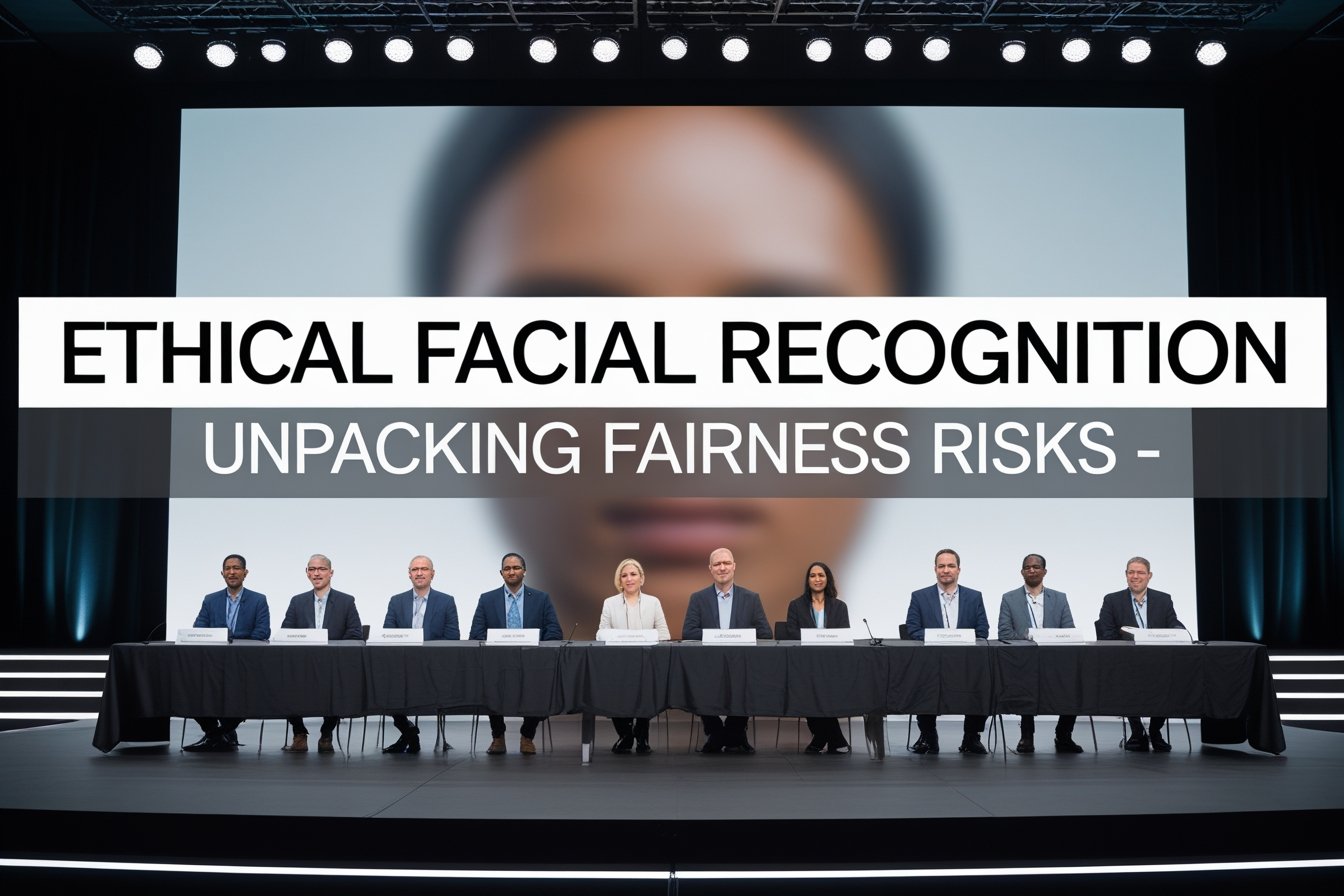
Picture this: you walk into a store, and within seconds, a computer system has analyzed your face, determined your mood, estimated your age, and possibly even flagged you as a potential security risk, all without your knowledge or consent. This isn’t science fiction; it’s the reality of ethical facial recognition technology that surrounds us today, raising critical questions about fairness risks, and digital equality.
The Hidden Architecture of Digital Discrimination:
Facial recognition systems operate like invisible gatekeepers in our modern world, making split-second decisions that can have a profound impact on people’s lives. These sophisticated algorithms don’t just see faces, they interpret them through the lens of their training data, which often carries embedded biases that mirror society’s deepest inequalities.
The fairness risks in facial recognition technology stem from a fundamental problem: machines learn what we teach them. When training datasets predominantly feature certain demographic groups while underrepresenting others, the resulting systems develop skewed perspectives that can perpetuate discrimination. This digital disparity affects everything from airport security screenings to employment verification processes.
What makes this particularly concerning is the scale at which these systems operate. Unlike human bias, which affects individual interactions, biased facial recognition can systematically discriminate against entire populations simultaneously. The technology’s speed and efficiency, while impressive, can amplify unfair treatment at an unprecedented rate.
When Algorithms Mirror Societal Prejudices:
The ethical implications of facial recognition become most apparent when examining real-world performance disparities. Research consistently shows that these systems struggle significantly more with identifying individuals from certain ethnic backgrounds, particularly women of color. This isn’t merely a technical glitch, it’s a reflection of how algorithmic bias perpetuates existing social inequalities.
Consider the cascading effects of these fairness risks: when a security system repeatedly flags individuals from specific demographic groups as suspicious, it creates a feedback loop that reinforces stereotypes. The technology doesn’t just reflect bias; it institutionalizes it, and discrimination appears objective and data-driven rather than prejudiced.
Machine learning fairness experts argue that these disparities aren’t inevitable technical limitations but rather the predictable outcome of insufficient attention to inclusive design. The challenge lies not just in improving accuracy across different groups but in fundamentally rethinking how we approach ethical AI development.
The psychological impact on affected communities cannot be understated. When people experience repeated false positives or system failures based on their appearance, it creates a sense of digital exclusion that extends far beyond the immediate technical inconvenience.
The Democracy Deficit in Digital Surveillance:
Privacy concerns in facial recognition extend beyond individual rights to encompass broader questions about democratic governance and social control. When governments and corporations deploy these systems without meaningful public consultation, they effectively reshape social norms around privacy and anonymity without democratic consent.
The surveillance implications are particularly troubling in contexts where facial recognition enables unprecedented tracking of citizens’ movements and associations. This capability transforms public spaces from areas of relative anonymity into zones of constant identification and monitoring, fundamentally altering the nature of civic life.
Ethical facial recognition policies must grapple with the tension between security benefits and civil liberties. The challenge isn’t simply about regulating existing technology but about establishing frameworks that can adapt to rapidly evolving capabilities while preserving democratic values.
International variations in regulatory approaches highlight how different societies balance these competing interests. Some nations have embraced comprehensive surveillance systems, while others have implemented strict limitations or outright bans on certain applications of facial recognition technology.
Transparency Challenges in Black Box Decision-Making:
The lack of transparency in facial recognition systems creates accountability gaps that undermine public trust and legal recourse. When individuals face adverse decisions based on algorithmic assessments of their faces, they often have no way to understand, challenge, or correct these determinations.
Algorithmic accountability requires more than just technical auditing, it demands comprehensible explanations that affected individuals can understand and contest. However, many commercial facial recognition systems operate as proprietary black boxes, making meaningful transparency difficult or impossible to achieve.
The consent issues surrounding facial recognition are particularly complex because these systems often capture and process biometric data without explicit permission. Unlike other forms of data collection, facial recognition can occur entirely without an individual’s knowledge, making traditional consent models inadequate.
Legal frameworks struggle to keep pace with technological capabilities, creating regulatory gaps where individuals have limited protection against potentially discriminatory or invasive uses of their biometric information. This mismatch between technological advancement and legal protection creates a zone of ethical uncertainty where harm can occur without clear recourse.
Corporate Responsibility in Facial Recognition Development:
The ethics of facial recognition in corporate contexts involves complex questions about profit motives, social responsibility, and the role of private companies in shaping public policy. When tech companies develop and deploy these systems, they make decisions that affect millions of people’s daily experiences and fundamental rights.
Responsible AI development requires companies to consider not just technical performance but also social impact and distributional effects. This includes investing in diverse training data, conducting regular bias audits, and engaging with affected communities throughout the development process.
The business incentives surrounding facial recognition don’t always align with ethical considerations. Companies may prioritize accuracy for their primary customer base while accepting lower performance for underrepresented groups, effectively creating a two-tiered system of technological access and reliability.
Industry self-regulation has proven insufficient to address these challenges comprehensively. Without external oversight and accountability mechanisms, market pressures alone rarely generate the sustained attention to fairness and equity that these systems require.
Building Bridges Toward Equitable Recognition Systems:
Creating fair facial recognition systems requires intentional design choices that prioritize inclusive technology development. This involves recruiting diverse development teams, collecting representative training data, and establishing performance standards that ensure equitable outcomes across different demographic groups.
Technical solutions to bias include algorithmic debiasing techniques, fairness-aware machine learning approaches, and continuous monitoring systems that detect and correct discriminatory patterns. However, these tools are only effective when implemented as part of broader organizational commitments to equity.
Community engagement plays a crucial role in developing ethical facial recognition systems. Affected communities should have meaningful input into how these technologies are designed, deployed, and governed. This participatory approach helps ensure that technical solutions address real-world needs and concerns.
The path forward requires collaboration between technologists, policymakers, civil rights advocates, and affected communities. No single stakeholder can solve these complex challenges alone, creating ethical facial recognition systems demands sustained, multi-sector cooperation.
Conclusion:
The journey toward ethical facial recognition demands more than technical fixes, it requires a fundamental reimagining of how we develop, deploy, and govern these powerful technologies. As we’ve explored, the fairness risks inherent in current systems aren’t just technical problems but reflections of deeper social inequalities that technology can either perpetuate or help address.
Moving forward, the responsibility lies with all stakeholders, developers, policymakers, businesses, and citizens, to ensure that facial recognition technology serves human dignity rather than undermining it. The choices we make today about ethical AI will shape the kind of society we inhabit tomorrow.
FAQs:
Q1: What makes facial recognition technology biased?
A: Training data that underrepresents certain demographic groups creates systems with higher error rates for those populations.
Q2: How do fairness risks affect different communities?
A: Marginalized communities face higher rates of false identification, leading to discrimination in employment, security, and services.
Q3: Can facial recognition bias be completely eliminated?
A: While bias can be significantly reduced through diverse data and algorithmic improvements, complete elimination requires ongoing monitoring.
Q4: What legal protections exist against facial recognition discrimination?
A: Legal frameworks vary by jurisdiction, with some regions implementing strict regulations while others lack comprehensive protections.
Q5: How can companies ensure ethical facial recognition practices?
A: Companies should conduct regular bias audits, use diverse datasets, engage affected communities, and prioritize transparency.
Q6: What role should the government play in regulating facial recognition?
A: Governments should establish clear ethical standards, enforce accountability measures, and protect citizens’ rights while balancing security needs.