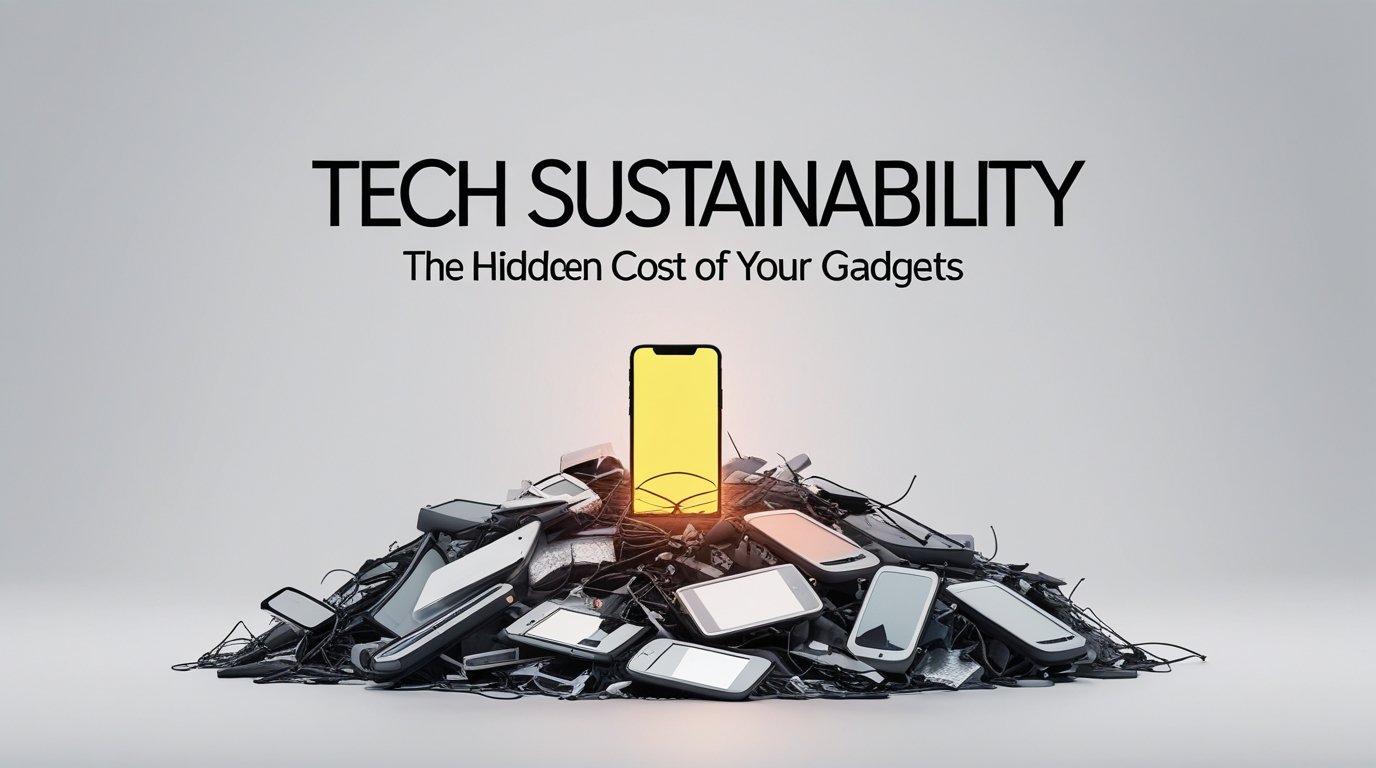
I unboxed the new phone. It was perfect. All glass and shiny metal. It felt like holding the future. Then I looked at the old one in my other hand. A three-year-old piece of plastic and silicon that was suddenly, magically, obsolete. And I thought about where it would go tomorrow. Not to a drawer. To a bin. And that bin would go on a truck, and that truck would probably go to a port. And I realized I wasn’t just holding a new phone. I was holding a verdict. A death sentence for the old one. We talk about carbon footprints and recycling like it’s a math problem. But it’s not. It’s a dirty, messy, physical chain that starts in a mine and ends in a toxic fire in someone else’s backyard. And we’re all missing the point.
The Cloud is a Factory:
We call it the cloud. What a joke. It’s not a cloud. It’s a factory. A massive, sprawling warehouse full of servers screaming with heat, guzzling electricity, and needing to be cooled with enough water to support a small town. Every time you stream a movie, every time you back up a photo, you’re plugging into that factory. You’re turning on a tap that drains a reservoir and burns coal somewhere. The internet isn’t weightless. It’s the single most energy-intensive thing humanity has ever built. And we treat it like it’s air.
The Battery’s Dirty Heart:
That little battery that lets you scroll for hours? It has a cost you never see. To get the lithium for it, miners pump billions of gallons of water into the ground in places like Chile, leaving the land a barren, toxic salt flat. To get the cobalt, companies tear up the earth in Congo, often using kids in pits that can collapse at any moment. We package this brutality into a sleek little rectangle and call it innovation. The real innovation is how good we are at hiding the blood and the dirt.
The Recycling Lie:
You take your old phone to the recycling bin, feeling good. You did your part. But chances are, you just sent it on a nightmare journey. It gets put on a ship and sent to Ghana or Pakistan. Not to a clean facility. To a scrapyard. Where someone making a dollar a day will burn the plastic off the wires to get to the copper, breathing in poison. They’ll dip circuit boards in acid to leach out tiny specks of gold, poisoning the river. Your conscience is clean because you “recycled” it. But all you did was pay to have your garbage set on fire in a poor neighborhood far away. Out of sight, out of mind.
The Upgrade Trap:
They don’t make things to last anymore. They make them to break. Or, even smarter, they make them feel slow. The software updates get heavier. The new apps demand more power. Your two-year-old phone isn’t broken. It’s been made to feel old. It’s planned obsolescence. We’re trained like puppies to want the next thing, to chase the slight speed boost, the slightly better camera. And we throw away a perfectly functional device because it’s no longer exciting. It’s a con. And we’re all falling for it.
What Actually Helps?
The answer isn’t a better recycling program. The answer is to need less. It’s to buy a phone and use it for five years instead of two. It’s to repair the cracked screen instead of replacing the whole device. It’s to demand that companies make things that last, and to punish them when they don’t. Sustainability isn’t about buying a new “green” product. It’s about keeping the product you already have alive for as long as humanly possible. The most sustainable gadget is the one you already own.
Conclusion:
Look, the truth is simple, but we avoid it. Our shiny new gadgets and our seamless “cloud” life come with a price tag that’s paid in toxic waste, depleted water tables, and human exploitation in places we never look. Recycling, as it stands, is mostly just a transfer of guilt.
The real fix isn’t some revolutionary new green tech. It’s revolutionizing our own behavior. It’s about breaking free from the upgrade trap, keeping your phone for five years, and demanding the right to repair.
The most sustainable thing you can do for the planet is to walk over to your old device, look at it, and promise it a longer life. The greenest gadget is the one you already own. Now, stop scrolling and go cherish the tech you have.
FAQs:
1. Is it even possible to avoid contributing to this?
No. But you can reduce your impact massively by buying less and keeping things longer.
2. Are any tech companies actually good about this?
Some are better than others, but all of them are still businesses that rely on you buying things. Look for companies that offer longer warranties and support for old devices.
3. What’s the single worst thing for the environment in tech?
The constant churn. The mining and manufacturing of a new device is far more damaging than the energy it uses over its life.
4. How can I properly recycle my electronics?
Don’t use a generic bin. Find an e-waste recycler certified by a standard like e-Stewards. They audit the process to ensure it’s not shipped overseas.
5. Do my individual actions even matter?
Yes. Collective demand for longer-lasting, repairable products is the only thing that will force companies to change.
6. What about carbon-neutral data centers?
It’s a step, but it often involves buying “carbon credits,” which is an accounting trick. It doesn’t solve the massive resource and water usage.